
Banco Económico profits surge despite insolvency; investment slump persists
Banco Económico reports $55m profit but remains technically insolvent; OECD figures reveal collapse in Angola's investment rate; cybersecurity regulator warns of gaps in national defences.
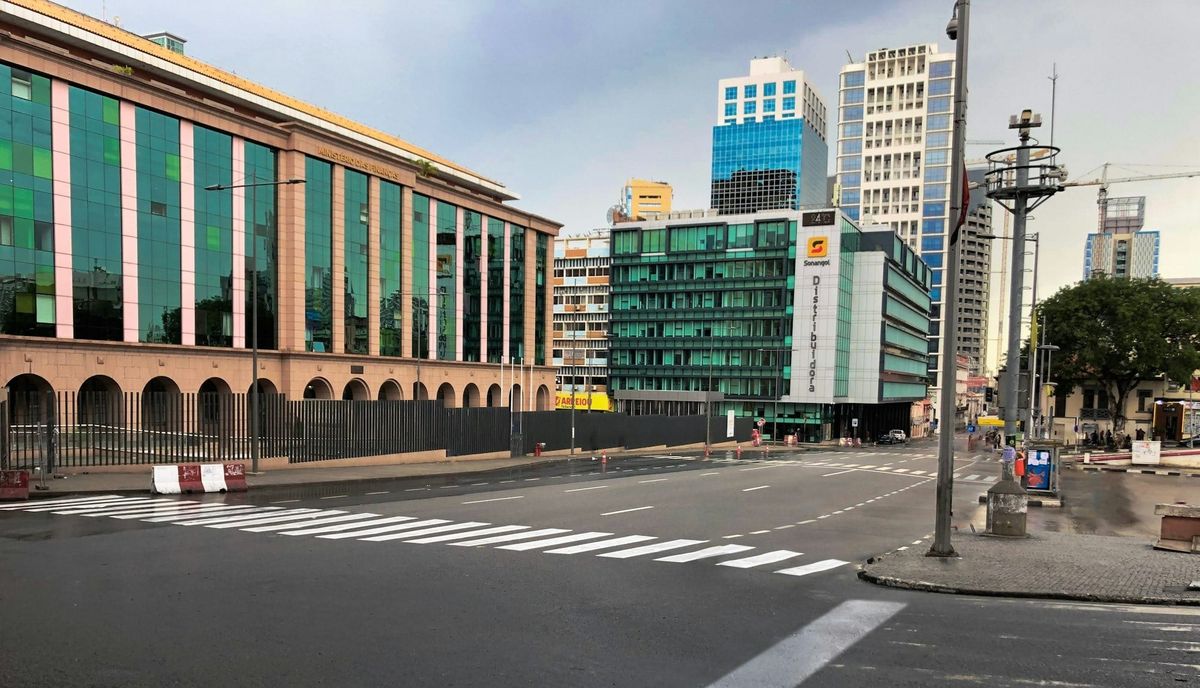
Banco Económico has reported a thirtyfold increase in profits despite remaining technically insolvent, highlighting the continuing weaknesses in parts of Angola's banking sector. The extraordinary results come as the country awaits a decision by Unitel on whether to acquire a controlling stake in BFA, potentially reshaping ownership of one of Angola's largest commercial banks.
Meanwhile, a new OECD and African Union report reveals how sharply investment in Angola has declined over the past decade, despite progress in reducing public debt. Elsewhere, Angola's data protection regulator has warned of significant gaps in the country's cybersecurity infrastructure, while the government has taken a first step towards establishing a domestic carbon market.
In today's Angola Today:
- Banking: Banco Económico reports $55m in profits despite remaining technically insolvent and struggling with liquidity problems.
- Investment: Angola's investment rate fell from 30% of GDP in 2016 to just 10% in 2024, according to a new OECD/African Union report.
- Cybersecurity: Regulator warns that key institutions and regulations remain unimplemented, leaving businesses and infrastructure vulnerable.
- Carbon markets: Government creates a commission to develop a framework for trading carbon credits and attracting environmental investment.
- Regulatory Update: Mandatory electronic invoicing is due to expand to more businesses from January.
- We've Been Watching: Unitel shareholders meet to decide on the BFA stake, while the MPLA prepares for its December congress.
Today's Angola Briefing:
 Zitamar Ltd
Banco Económico profits surge despite continuing technical insolvency
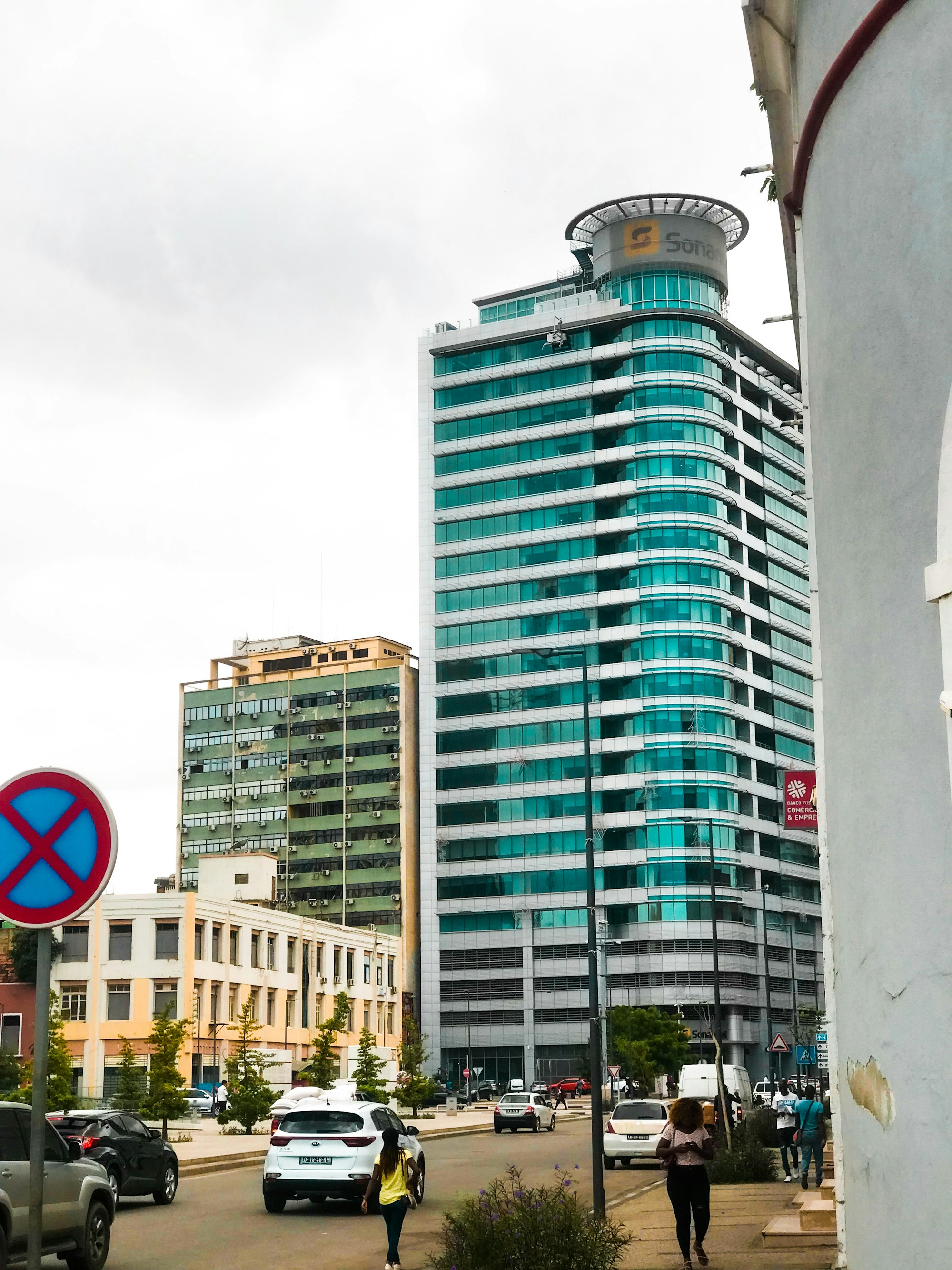
Angola's Banco Económico reported profits of Kz50.4bn ($55.2m) in the first nine months of 2026, nearly thirty times the Kz1.7bn earned in the equivalent period last year, despite remaining technically insolvent and facing serious liquidity constraints. According to Expansão's analysis of the bank's third-quarter accounts, the former Banco Espírito Santo Angola continues to struggle to restore normal banking operations, even as its reported financial results improve.
Much of the bank's recent financial recovery has depended on disposing of property assets rather than generating earnings from conventional banking activities. More than 1,000 properties have reportedly been sold over approximately two years, but these transactions have not resolved its structural liquidity problems. The institution has been undergoing restructuring since the collapse of its former Portuguese parent, Banco Espírito Santo, and the deterioration of its own finances. Expansão
The figures also provide an interesting counterpoint to the broader industry's recent performance. As we reported on Tuesday, Angola's commercial banks generated combined profits of approximately $939m in the first nine months of 2026, while increasing their holdings of government debt. The sector can be highly profitable without necessarily becoming more effective at financing the productive economy — a particularly important distinction as the government seeks to encourage private investment.
Angola's investment rate falls by two-thirds despite progress on public debt
Angola's investment rate fell from 30.1% of GDP in 2016 to just 10.4% in 2024, according to Africa's Development Dynamics 2026, a new report published on Wednesday by the OECD and African Union. Gross fixed capital formation — investment in assets such as buildings, machinery and infrastructure — was substantially below the African average of 19.1% of GDP in 2024, despite Angola's progress in reducing public debt over the same period.
The report examines how high borrowing costs, debt-servicing pressures and limited economic diversification can constrain investment and economic transformation across Africa. In Angola, the sharp decline in capital formation illustrates the difficulty of translating improvements in macroeconomic indicators into sustained investment in productive capacity. The figures cover the period to 2024, rather than measuring investment during the current year. OECD/African Union — Africa's Development Dynamics 2026
During our 24 September Angola Briefing on investing in Angola, economist Francisco Paulo distinguished between the relative ease of registering a business and the much greater difficulty of operating one, pointing to unreliable electricity and water supplies and burdensome administrative procedures. Entrepreneur Cláudio Silva similarly highlighted practical problems including paperwork, skills shortages and payments infrastructure. Their observations help explain why regulatory reforms and improving headline indicators do not necessarily translate into productive investment. Both return to Angola Briefing today.
Cybersecurity regulator warns of gaps in Angola's digital defences
Angola's Data Protection Agency (APD) has warned that significant elements of the country's cybersecurity framework remain unimplemented, despite the approval of legislation intended to strengthen digital security. Speaking at a conference on digital transformation on 25 November, APD official Cruz Joaquim da Gama highlighted the absence of essential regulations and institutions, including the proposed National Cybersecurity Centre, and called for greater investment in protecting critical infrastructure.
Separate figures from cybersecurity company Netscout show that Angola experienced at least 100 recorded distributed denial-of-service attacks during the first half of 2026, including 47 targeting telecommunications operators and six targeting the oil industry. These figures cover a specific type of attack and predate July's major disruption to Unitel's services, rather than representing a comprehensive count of cyber incidents during the year. Economia & Mercado | Expansão
During our 30 July Angola Briefing, Cláudio Silva described how the Unitel outage prevented businesses from accepting electronic payments and customers from completing bank transfers requiring SMS authentication. The episode demonstrated how weaknesses in one major telecommunications network can spread rapidly across the wider economy. The APD's latest warning suggests that strengthening Angola's resilience will require not only better protection by individual companies, but effective implementation of national cybersecurity institutions and regulations.
Angola moves to establish domestic carbon market
President João Lourenço has established a multisectoral commission to develop the legal and institutional framework for a carbon market in Angola. Created under Presidential Order 423/26 of 19 November, the commission will be responsible for proposing rules governing the certification, verification, registration and trading of carbon credits, as well as mechanisms to attract investment into projects that reduce greenhouse-gas emissions or remove carbon from the atmosphere.
The initiative could open opportunities for investment in forest conservation, reforestation, ecosystem restoration and low-emissions technologies. The presidential order also calls for mechanisms to ensure transparent distribution of revenues and protect the rights of local communities participating in environmental projects. The commission's establishment represents a preparatory step: Angola does not yet have an operational carbon-credit trading framework under the proposed arrangements. Angolan government
However, international carbon markets have faced increasing scrutiny over the credibility of emissions reductions, ownership of carbon rights and the distribution of benefits to local communities. Establishing a commission is a useful starting point, but investor confidence will depend on the eventual regulatory framework, independent verification standards and clarity over land and resource rights.
Regulatory Update: Electronic invoicing to expand from January
Angola is preparing to extend mandatory electronic invoicing to more businesses from 1 January 2027, with companies covered by the general and simplified VAT regimes expected to adopt systems complying with the requirements of the General Tax Administration (AGT). Large taxpayers and suppliers to government institutions have already been covered by the initial implementation phase.
The expansion will require affected businesses to ensure their invoicing software and administrative processes meet AGT specifications. The precise treatment of smaller businesses, including potential exemptions based on turnover or imports, remains an area requiring clarification in the latest guidance. The January deadline was announced previously, but its approach makes compliance preparations increasingly important for businesses operating in Angola. Ponto de Situação | RVA Advogados
We've Been Watching
Unitel shareholders meet to decide on BFA stake. Unitel shareholders are scheduled to meet today to decide whether the telecommunications operator should exercise its right of first refusal over the 33.35% stake in Banco de Fomento Angola that Portugal's BPI has agreed to sell to Congolian, part of the Carrinho Group. Unitel already owns 36.9% of BFA, meaning the acquisition would increase its holding to 70.25% and could trigger a mandatory public takeover offer. The decision could significantly reshape ownership of one of Angola's leading banks. No outcome had been confirmed at the time of writing. Unitel — shareholder proposal
MPLA prepares to choose presidential candidate. The ruling party is preparing for its congress on 9–10 December, when its new Central Committee is expected to select the MPLA's lead candidate for Angola's 2027 general election. João Lourenço is expected to be re-elected party president, but cannot stand for a third term as president of the republic. Meanwhile, excluded leadership challenger Higino Carneiro continues to pursue legal action aimed at challenging the congress. No ruling suspending it has been reported. Novo Jornal
As we explored in our 12 November Angola Briefing with Paula Cristina Roque and Rui Verde, the central question is not simply who becomes the MPLA's presidential candidate, but how political power will be divided if Lourenço remains party leader after leaving the presidency. Verde argued that the principal instruments of executive power remain attached to the presidency of the republic, potentially complicating Lourenço's ambitions to retain influence over his successor.
Also in the news
HIV treatment continues despite donor funding cuts. Angola's health authorities say sufficient antiretroviral medicines are available to maintain HIV treatment, despite reductions in international funding that have affected community-based prevention and support programmes. According to figures cited by health officials, approximately 188,000 of an estimated 377,000 Angolans living with HIV received treatment in 2025, highlighting substantial gaps in coverage. Lusa
Non-oil taxes account for more than one-third of government revenue. Angola collected Kz5.63tn (approximately $6.16bn) in non-oil tax revenues during the first nine months of 2026, representing 34.6% of total government revenue, according to analysis of preliminary Finance Ministry figures. The data underline both the growing contribution of non-oil taxation and the government's continuing dependence on petroleum revenues. Revista Outside
Today on Angola Briefing
Thursday 26 November
Fernando Lima will be joined by economist Francisco Paulo and entrepreneur Cláudio Silva for a discussion of Angola's latest political and economic developments.
With fresh questions over the banking sector, investment, business conditions and the approach of the 2027 elections, today's programme will examine whether improvements in Angola's economic indicators are translating into a stronger, more resilient economy.
Join us for the discussion and an opportunity to hear the perspectives of two regular Angola Briefing contributors.
 Zitamar Ltd

Comments ()